
Lone Star Software Symposium: Dallas
April 8 - 10, 2022
Speakers
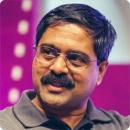
Venkat Subramaniam
Founder @ Agile Developer, Inc.
Dr. Venkat Subramaniam is an award-winning author, founder of Agile Developer, Inc., creator of agilelearner.com, and an instructional professor at the University of Houston.
He has trained and mentored thousands of software developers in the US, Canada, Europe, and Asia, and is a regularly-invited speaker at several international conferences. Venkat helps his clients effectively apply and succeed with sustainable agile practices on their software projects.
Venkat is a (co)author of multiple technical books, including the 2007 Jolt Productivity award winning book Practices of an Agile Developer. You can find a list of his books at agiledeveloper.com. You can reach him by email at venkats@agiledeveloper.com or on twitter at @venkat_s.

Craig Walls
Author of 'Spring in Action' and 'Spring AI in Action'
Craig Walls is a Principal Engineer, Java Champion, Alexa Champion, and the author of Spring AI in Action, Spring in Action, and Build Talking Apps. He's a zealous promoter of the Spring Framework, speaking frequently at local user groups and conferences and writing about Spring. When he's not slinging code, Craig is planning his next trip to Disney World or Disneyland and spending as much time as he can with his wife, two daughters, 1 bird and 2 dogs.

Raju Gandhi
Founder, DefMacro Software
Raju is a software craftsman with almost 20 years of hands-on experience scoping, architecting, designing, implementing full stack applications.
He provides a 360 view of the development cycle, is proficient in a variety of programming languages and paradigms, experienced with software development methodologies, as well an expert in infrastructure and tooling.
He has long been in the pursuit of hermeticism across the development stack by championing immutability during development (with languages like Clojure), deployment (leveraging tools like Docker and Kubernetes), and provisioning and configuration via code (toolkits like Ansible, Terraform, Packer, everything-as-code).
Raju is a published author, internationally known public speaker and trainer.
Raju can be found on Twitter as @looselytyped.
In his spare time, you will find Raju reading, playing with technology, or spending time with his wonderful (and significantly better) other half.

Dave Klein
Developer Advocate with Confluent
After 28 years as a developer, architect, project manager (recovered), author, trainer, conference organizer, and homeschooling dad, Dave Klein landed his dream job as a developer advocate at Confluent. Dave is marveling in and eager to help others explore the amazing world of event streaming with Apache Kafka.

Rohit Bhardwaj
Director, AI Architecture | Author | Founder, AI Architect Circle
Rohit Bhardwaj is Director of AI & Data Architecture at Salesforce, an O’Reilly instructor, and founder of AI Architect Circle. With 30 years of experience in software and enterprise architecture, he helps engineers, architects, and technology leaders make architecture decisions they can explain and defend.
His work brings together enterprise AI, agentic systems, data architecture, and distributed systems. He focuses on the decisions that determine whether a system remains reliable, secure, accountable, and economically sustainable when it encounters real-world demands.
Rohit’s talks and workshops explore practical questions: What happens when an AI agent acts on conflicting information? Can a failed payment be retried safely? Who can stop an autonomous action, and what evidence explains the decision afterward? His teaching connects these questions to architecture, customer trust, and business outcomes.
He is the author of System Design with AI Interview Guide: Designing Scalable, Agentic, and Defensible Systems, published by Apress. He also developed ARCHVIEW™, ROCS Loops™, and LLM-SHIELD™ to help teams structure architectural thinking and address the challenges of building trustworthy AI systems.
Through AI Architect Circle, Rohit extends this learning through live discussions, book walkthroughs, videos, and interactive architecture challenges. These challenges explore incidents such as payment timeouts and conflicting bookings, helping participants practice the judgment behind their design decisions.
Continue learning with Rohit
Join Rohit live on Saturdays at 9:00 a.m. Eastern
System Design with AI — Live with the Author is a free live podcast and Q&A series featuring practical system-design scenarios, AI architecture discussions, and questions from the community.
See the next session and register
Try an interactive architecture challenge
Put your design decisions under pressure and explore the consequences.
Explore the challenges
Explore AI Architect Circle
Find architecture lessons, videos, resources, and ways to continue learning.
Visit AIArchitectCircle.com
Read the book: Amazon · O’Reilly
Watch and connect: YouTube · Instagram: @aiarchitectcircle · LinkedIn · X / Twitter: @rbhardwaj1

Jonathan Johnson
Software Architect
Jonathan Johnson is an independent software architect with a concentration on helping others unpack the riches in the cloud native and Kubernetes ecosystems.
For 30 years Jonathan has been designing useful software to move businesses forward. His career began creating laboratory instrument software and throughout the years, his focus has been moving with industry advances benefitting from Moore’s Law. He was enticed by the advent of object-oriented design and applied it to financial software. As banking moved to the internet, enterprise applications took off and Java exploded onto the scene. Since then, he has inhabited that ecosystem. After a few years, he returned to laboratory software and leveraged Java-based state machines and enterprise services to manage the terabytes of data flowing out of DNA sequencing instruments. As a hands-on architect, he applied the advantages of microservices, containers, and Kubernetes with a laboratory management platform.
Today he enjoys sharing his experience with peers. He provides perspective on ways to modernize application architectures while adhering to the fundamentals of modularity - high cohesion and low coupling.microservices, containers, and Kubernetes to their laboratory management platform.

Kate Wardin
Senior Engineering Manager @ Netflix
Kate Wardin is an Engineering Manager at Netflix and is based in Minneapolis, Minnesota. She enjoys exploring the psychology of happiness at work and is passionate about building inclusive and high performing teams via people-first leadership. She believes in the power of humor to bring people together to create a positive and cohesive workplace. In her free time, Kate enjoys unwinding by watching The Office or chasing her toddler and dog.