
Lone Star Software Symposium: Austin
July 26 - 28, 2019
Speakers
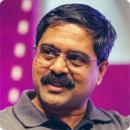
Venkat Subramaniam
Founder @ Agile Developer, Inc.
Dr. Venkat Subramaniam is an award-winning author, founder of Agile Developer, Inc., creator of agilelearner.com, and an instructional professor at the University of Houston.
He has trained and mentored thousands of software developers in the US, Canada, Europe, and Asia, and is a regularly-invited speaker at several international conferences. Venkat helps his clients effectively apply and succeed with sustainable agile practices on their software projects.
Venkat is a (co)author of multiple technical books, including the 2007 Jolt Productivity award winning book Practices of an Agile Developer. You can find a list of his books at agiledeveloper.com. You can reach him by email at venkats@agiledeveloper.com or on twitter at @venkat_s.

Neal Ford
Director / Software Architect / Meme Wrangler
Neal is Director, Software Architect, and Meme Wrangler at ThoughtWorks, a global IT consultancy with an exclusive focus on end-to-end software development and delivery.
Before joining ThoughtWorks, Neal was the Chief Technology Officer at The DSW Group, Ltd., a nationally recognized training and development firm. Neal has a degree in Computer Science from Georgia State University specializing in languages and compilers and a minor in mathematics specializing in statistical analysis.
He is also the designer and developer of applications, instructional materials, magazine articles, video presentations, and author of 6 books, including the most recent The Productive Programmer. His language proficiencies include Java, C#/.NET, Ruby, Groovy, functional languages, Scheme, Object Pascal, C++, and C. His primary consulting focus is the design and construction of large-scale enterprise applications. Neal has taught on-site classes nationally and internationally to all phases of the military and to many Fortune 500 companies. He is also an internationally acclaimed speaker, having spoken at over 100 developer conferences worldwide, delivering more than 600 talks. If you have an insatiable curiosity about Neal, visit his web site at http://www.nealford.com. He welcomes feedback and can be reached at nford@thoughtworks.com.

Brian Sletten
Forward Leaning Software Engineer @ Bosatsu Consulting
Brian Sletten is a liberal arts-educated software engineer with a focus on forward-leaning technologies. His experience has spanned many industries including retail, banking, online games, defense, finance, hospitality and health care. He has a B.S. in Computer Science from the College of William and Mary and lives in Auburn, CA. He focuses on web architecture, resource-oriented computing, social networking, the Semantic Web, AI/ML, data science, 3D graphics, visualization, scalable systems, security consulting and other technologies of the late 20th and early 21st Centuries. He is also a rabid reader, devoted foodie and has excellent taste in music. If pressed, he might tell you about his International Pop Recording career.

Craig Walls
Author of 'Spring in Action' and 'Spring AI in Action'
Craig Walls is a Principal Engineer, Java Champion, Alexa Champion, and the author of Spring AI in Action, Spring in Action, and Build Talking Apps. He's a zealous promoter of the Spring Framework, speaking frequently at local user groups and conferences and writing about Spring. When he's not slinging code, Craig is planning his next trip to Disney World or Disneyland and spending as much time as he can with his wife, two daughters, 1 bird and 2 dogs.

Nathaniel Schutta
Architect as a Service
Nathaniel T. Schutta is a software architect and Java Champion focused on cloud computing, developer happiness and building usable applications. A proponent of polyglot programming, Nate has written multiple books, appeared in countless videos and many podcasts. He’s also a seasoned speaker who regularly presents at worldwide conferences, No Fluff Just Stuff symposia, meetups, universities, and user groups. In addition to his day job, Nate is an adjunct professor at the University of Minnesota, where he teaches students to embrace (and evaluate) technical change. Driven to rid the world of bad presentations, he coauthored the book Presentation Patterns with Neal Ford and Matthew McCullough, and he also published Thinking Architecturally and Responsible Microservices available from O’Reilly. His latest book, Fundamentals of Software Engineering, is currently available in early release.

Jonathan Johnson
Software Architect
Jonathan Johnson is an independent software architect with a concentration on helping others unpack the riches in the cloud native and Kubernetes ecosystems.
For 30 years Jonathan has been designing useful software to move businesses forward. His career began creating laboratory instrument software and throughout the years, his focus has been moving with industry advances benefitting from Moore’s Law. He was enticed by the advent of object-oriented design and applied it to financial software. As banking moved to the internet, enterprise applications took off and Java exploded onto the scene. Since then, he has inhabited that ecosystem. After a few years, he returned to laboratory software and leveraged Java-based state machines and enterprise services to manage the terabytes of data flowing out of DNA sequencing instruments. As a hands-on architect, he applied the advantages of microservices, containers, and Kubernetes with a laboratory management platform.
Today he enjoys sharing his experience with peers. He provides perspective on ways to modernize application architectures while adhering to the fundamentals of modularity - high cohesion and low coupling.microservices, containers, and Kubernetes to their laboratory management platform.

Arty Starr
Author of Idea Flow, Founder, FlowInsight
Arty Starr is a recognized Flow Experience expert, researcher, speaker and thought leader, and author of Idea Flow, how to measure the friction in software development. Arty's PhD research is developing a theory of momentum in software development, and she is creator of the FLOWS platform designed to help developers thrive and find joy through more time in the flow state. The company she founded, FlowInsight, is on a mission to bring back joy to our everyday work.
Arty is also a 2D/3D animator and artist, and has spent the last couple years building 3D apps in AR. She loves to share about her experiences with these technologies.

Michael Carducci
Software Architect & Magician
Michael Carducci spent years learning to see things as they actually are; first as a magician, then as a software architect, now as both simultaneously. And somehow that’s not even the whole story.
He’s the author of Mastering Software Architecture (Apress, 2025) and is currently writing The Semantic Layer (Packt, 2026). He has spent over 25 years following interesting problems; through roles from individual contributor to CTO and back again, across industries and continents.
As a speaker, he applies the same toolkit he uses in close-up magic: attention, misdirection, timing, storytelling, and the instinct to take the long way around when that’s where the truth lives. Audiences at hundreds of conferences across four continents have described his talks as the kind that change how you think about a problem rather than just what you know about it.
He also makes YouTube videos about technology and curiosity with his wife Kate, because some ideas are too important (or too interesting!) to leave only in conference rooms.

Lyndsey Padget
Solutions Architect at VMLY&R Kansas City
Lyndsey is a technology leader with nearly 20 years of software and web development experience at both mega-corporations and startups. She enjoys sharing in-depth knowledge on topics such as Git & release management, MERN stack development, microservices & REST, test-driven development, agile & kanban, healthy teams, diversity & inclusion, public speaking, and more. Lyndsey is involved in local organizations that encourage women, young and old, to explore careers in math and science. She believes that the difference between a good software engineer and a great one often has little to do with code.

Sam Snyder
VP of Engineering @ Moderne
Sam Snyder has spent the past decade working on improving developer happiness with better tooling. At Tableau software, he used data from the development and deployment pipeline to systematically seize the greatest opportunities for improvement and eliminate the greatest pain points. At Gradle, he integrated that process and data visualization methodology into Gradle Enterprise. Now as VP of Engineering at Moderne, Sam leads development on the core refactoring technologies and teaches Moderne's customers how to automate away the tedious, repetitive parts of software development.