
Venkat Subramaniam
ArchConf
Clearwater · December 12 - 15, 2016
Founder @ Agile Developer, Inc.
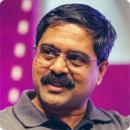
Dr. Venkat Subramaniam is an award-winning author, founder of Agile Developer, Inc., creator of agilelearner.com, and an instructional professor at the University of Houston.
He has trained and mentored thousands of software developers in the US, Canada, Europe, and Asia, and is a regularly-invited speaker at several international conferences. Venkat helps his clients effectively apply and succeed with sustainable agile practices on their software projects.
Venkat is a (co)author of multiple technical books, including the 2007 Jolt Productivity award winning book Practices of an Agile Developer. You can find a list of his books at agiledeveloper.com. You can reach him by email at venkats@agiledeveloper.com or on twitter at @venkat_s.
Presentations
Core Software Design Principles
Creating code is easy, creating good code takes a lot of time, effort, discipline, and commitment. The code we create are truly the manifestations of our designs. Creating a lightweight design can help make the code more extensible and reusable.
Towards an Evolutionary Architecture
Big up front design is discouraged in agile development. However, we know that architecture plays a significant part in software systems. Evolving architecture during the development of an application seems to be a risky business.
Pragmatics of TDD to Evolve Design
Test Driven Design, we hear is a great way to create lightweight design that is easier to maintain and evolve. Unfortunately, just writing test cases mechanically do not lead to good design. In fact, it may really not lead us anywhere we want to really go!
Designing Reactive Systems: Creating Highly Responsive and Resilient Applications
Organizations have moved from making their employees available to having their applications available directly to the users. This changes the magnitude of scale
of interactions the applications have to support. Furthermore, with devices and bots accessing the systems, we’re looking at a complete different rate of response than we once had to aim for.
Towards an Agile Design
It's common knowledge: software must be extensible, easier to change, less expensive to maintain. But, how? That's what we often struggle with. Thankfully there are some really nice design principles and practices that can help us a great deal in this area.
Towards an Agile Design
It's common knowledge: software must be extensible, easier to change, less expensive to maintain. But, how? That's what we often struggle with. Thankfully there are some really nice design principles and practices that can help us a great deal in this area.
Interactive Development and Fast Feedbacks with Java 9 REPL
Programming is an act of continuous discoveries. Auto-Completion in IDEs are great, but they're more of a speculation than experimentation. Read-Evaluate-Print-Loop or REPL gives an instant feedback and the ability to quickly try out your ideas. Fast feedbacks are the rage today in development.
Twelve Ways to Make Code Suck Less
We all have seen our share of bad code and some really good code as well. What are some of the common anti patterns that seem to be recurring over and over in code that sucks? By learning about these code smells and avoiding them, we can greatly help make our code better.
The Power and Perils of Parallel Streams
Turning a stream into a parallel stream is extremely easy, but is that the prudent thing to do? While flipping that switch is almost effortless there are some significant ramifications. In this presentation we will learn the power of parallel streams but also why, when, and where it makes sense to use parallel streams. Through a series of example we will learn about cases where it makes sense and some there it does not.
Let's Get Lazy: Explore the Real Power of Streams
Efficiency is achieved not just by running things faster, but by avoiding things that shouldn't be done in the first place. Lazy evaluations are a core feature of many functional programming languages. Your code can benefit from lazy evaluations with lambda expressions and, more so, with the power of Streams.
Thinking in Functional Style
Functional Programming has been around for a while, but it is gaining popularity, especially due to direct support in languages on the JVM. Writing code in functional style is not about syntax, it is a paradigm shift. In this presentation, using examples from Java, Groovy, and Scala, you will learn how to write code in functional style. We will start out discussing the elements of functional programming and then look at examples of some common operations and how you can implement those in functional style.