
Beyond Cookies: Persistent Storage for AJAX/DHTML Applications Using Dojo.Storage
The Ajax Experience
San Francisco · May 10 - 12, 2006
About this Presentation
Learn how the new dojo.storage system can allow web applications to persistently and securely store large amounts of data.
Web applications have been constrained by the 4K limit of cookies for years. Learn how the new dojo.storage system can allow web applications to persistently and securely store large amounts of data. Developers will be shown how to use the dojo.storage API; example applications that use these APIs, such as a web-based word processor that persists its file's locally rather than on a server; and details of how dojo.storage is internally implemented.
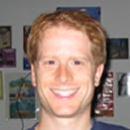
Creator of Really Simple History, AMASS, and Dojo Contributor
Brad Neuberg has done extensive work in the open source community, contributing code to Mozilla, JXTA, the Jakarta Feed Parser, and more. His experience includes developing on Wall Street with distributed systems, n-tier design, and J2EE. As Senior Software Engineer at Rojo Networks, Brad focused on next-generation aggregators, the blogosphere, MySQL, AJAX, and Lucene. Recent work includes consulting for the Internet Archive to create an AJAX book reader; focusing on AJAX/DHTML open source frameworks, including the Really Simple History library, recently adopted by Google; the AJAX Massive Storage System (AMASS), which allows web applications to permanently and securely store megabytes of data; founding and running coworking, a space that provides developers with structure, community, and innovation; and writing articles for such online publications as The O'Reilly Network.
Brad has extensive experience in web technologies, including AJAX, DHTML, JSON, and more, and is an advocate of rapid prototyping and usability. He has been creating advanced collaborative systems since 1998, such as Paper Airplane, a research project exploring the possibilities of a two way web. He has also been a member of the peer-to-peer community, running the P2P Sockets framework, an open-source web service stack ported to run on a P2P overlay network.
Brad completed his undergraduate studies in Computer Science at Columbia University. He has presented at JavaOne, The University of California at Berkeley, and Columbia University.